Car Recovery Dubai: What to Expect from 24/7 Roadside Assistance
Breaking down on a Dubai freeway at 2 a.m. is a specific kind of stress. The city never fully sleeps, but the traffic thins out, the highway lights stretch long, and if your engine dies near Jebel Ali or the Dubai Creek area, you can feel very alone very fast. I have been there myself twice, once in a sedan that overheated near the Burj Khalifa exit, and once in a friend's delivery van that lost its transmission near Al Ain. In both cases, the immediate need was the same: a reliable car recovery dubai service that could get to me fast, without hidden charges, and with the right equipment for the situation.
Over the years I have learned what separates a smooth recovery from a nightmare. It is not just about having a tow truck show up. It is about the driver knowing the geography, the kind of truck they send, and whether they handle the paperwork if the Dubai Police or RTA get involved. This article walks through what you should expect, what to ask for, and how to avoid common pitfalls when you need emergency towing or roadside help anywhere in the UAE.
Why Location Matters for Car Recovery Dubai
Dubai is not a small city. The distance from the northern outskirts near Sharjah all the way down to the industrial zones around Jebel Ali is over fifty kilometres. Traffic conditions, road tolls, and even the type of breakdown you might have change a lot depending on where you are. A car recovery dubai company that covers the whole emirate needs to know the shortcuts, the construction zones, and which exits have enough shoulder for a flatbed to park safely.
If your car stops near the Burj Khalifa area, recovery is usually straightforward because the roads are wide and well-lit. But if you break down on a sandy shoulder between Dubai and Abu Dhabi, or near a remote construction site in Al Ain, the driver might need a winch to pull your vehicle onto a flatbed without damaging the undercarriage. That is why the best services ask for your exact location and any landmarks before they dispatch. They also check whether you need a standard tow truck or a heavy vehicle recovery unit, especially if you are driving a large van or a motorcycle that requires a special ramp.

Common Breakdown Scenarios and How They Are Handled
Most people think of a tow when they hear "car recovery", but the reality is broader. A good 24/7 roadside assistance provider deals with everything from a flat tire to a lockout service where you have locked your keys inside the car at a petrol station. Here are the scenarios I have seen most often, and how professionals handle them.
- Dead battery or electrical failure. A battery jump-start solves this in minutes if the battery is just discharged. But if the alternator has failed, the truck will tow the car to a garage rather than waste time with a jump that won't hold.
- Empty fuel tank. Fuel delivery sounds simple, but the driver needs to bring the right type of petrol or diesel. Most recovery services carry a small can of mixed fuel, but for specific high-octane requirements they may recommend a tow to the nearest station instead.
- Flat tire with no spare. A tire change is quick if the driver has the right tools. But if the tire is shredded or the rim is damaged, the car goes onto a flatbed to avoid further tyre or wheel damage.
- Accident or collision. If the Dubai Police are involved, the recovery operator often works directly with them to clear the road quickly. This is common near major intersections or on Sheikh Zayed Road. The tow truck must be licensed for accident recovery, and the driver should have a copy of the police report number before moving the vehicle.
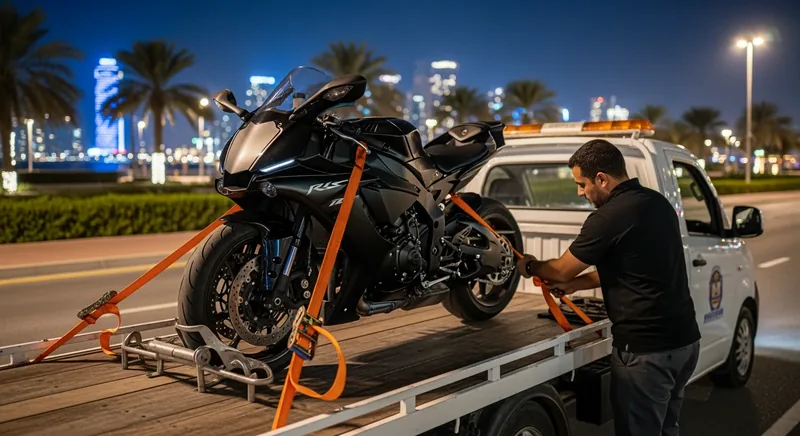
Motorcycle transport deserves a special mention. Bikes are lighter but more fragile. A proper recovery service will use a flatbed with a ramp and straps that do not scratch the frame. I have seen riders in Sharjah call a general tow company only to watch their motorcycle get dragged onto a rusty truck with no proper tie-downs. That is avoidable if you ask upfront whether the company handles motorcycles and what type of truck they send.
What to Look for in a Recovery Provider
Not all recovery companies operate the same way. Some are small operations with one old truck and a driver who barely speaks English. Others are well-organized fleets that coordinate with the RTA and have modern flatbeds with built-in winches. The difference matters when you are stuck in the heat or in heavy traffic.
First, check if they offer a clear price over the phone. A reputable car recovery dubai company will quote a flat fee for the tow based on the distance and the vehicle type. They should also tell you whether the price includes the first few kilometres or if there is a per-kilometre charge after that. Avoid anyone who refuses to give a quote or says "it depends" without explaining what it depends on.
Second, ask about the driver's experience with heavy vehicle recovery. If you are driving a loaded truck or a large bus, the recovery process is different from a standard car. The tow truck needs a higher weight rating, and the driver must know how to secure the load without shifting the cargo. The same goes for vehicles stuck in sand or mud, where a winch and a skilled operator can make the difference between a quick pull and a broken frame.
Third, verify that they cover the area you are in. Some companies only operate within Dubai city limits and charge extra for trips to Al Ain or Abu Dhabi. Others have partnerships with providers in other emirates and can dispatch a local truck faster than driving one from Dubai. If you travel frequently between Sharjah and Dubai, choose a provider that lists both areas on their service map.
The Role of Third-Party Assistance and Insurance
Many drivers in the UAE have some form of roadside assistance through their insurance or through a membership club like ADAC. ADAC is a German automobile club that offers international coverage, and it partners with local recovery companies in Dubai to handle their members' calls. If you are an ADAC member or have similar coverage, your first step should be to call the club's hotline. They will dispatch an approved local provider, and the billing is handled between the club and the recovery company. You may still need to pay a small excess, but the process is smoother than finding a company on your own.
Insurance policies vary widely. Some include emergency towing up to a certain distance, while others only cover accident recovery. Always read the fine print before you need it. I once helped a friend whose insurance covered towing but only to a garage of their choice, which happened to be twenty kilometres past his home. He ended up paying extra to get the car moved again. If your policy is restrictive, consider adding a standalone roadside assistance plan that covers lockout service, fuel delivery, and battery jump-start without extra fees.
Practical Tips for Staying Safe While Waiting
While help is on the way, your safety is the priority. Turn on your hazard lights immediately. If possible, move the vehicle to a safe spot such as a hard shoulder or a service station. On highways near the Dubai Creek or the Burj Khalifa, there are usually emergency phones every few hundred metres. Use them to report your location to the RTA or Dubai Police, especially if you are blocking a lane.
Do not stand behind your car or beside it on the road. Stay behind the guardrail or on the passenger side away from traffic. When the tow truck arrives, let the driver position the truck. Do not try to attach tow hooks or straps yourself. A professional driver will handle the winch and the tie-downs quickly and safely.
If you are waiting in a remote area like Al Ain or near Jebel Ali at night, keep your phone charged and the recovery company's number saved. Share your live location via WhatsApp or a map app so the driver can find you without delays. Good communication cuts down the wait time significantly.

Final Thoughts on Choosing Car Recovery Dubai
Nobody plans a breakdown, but you can plan how you respond. Knowing what to expect from a professional car recovery dubai service saves you time, money, and frustration. Whether you need a simple battery jump-start, a tire change, or a full heavy vehicle recovery, the key is choosing a provider that is honest about pricing, equipped for your vehicle type, and familiar with the roads from Sharjah to Abu Dhabi.
I keep the contact details of a reliable recovery company in my glovebox and in my phone contacts. It is one of those small habits that has paid off twice already. The next time you see a flatbed heading toward the Burj Khalifa or a tow truck parked at a service station, remember that behind the wheel is someone who has probably seen every kind of breakdown the UAE has to offer. That experience is exactly what you want when your car decides to stop moving.